 BECE Past Questions
BECE 2020 Pre-Technical Skills Past Questions and Answers
30 objective questions and 4 theory questions from the 2020 BECE Pre-Technical Skills paper. Answers and worked solutions for questions 1 to 10 are below; the rest are free in the app.
Practise this paper free, online or offline


On an iPhone? Download on the App Store
On Android? Get it on Google Play
Paper 1: Objectives
-
The appropriate instrument used for drawing circles on paper is a
- A. pair of dividers
- B. pair of compasses
- C. protractor
- D. set square
Answer: B -
Which of the following methods of drawing is in two dimensions?
- A. Isometric
- B. Oblique
- C. Orthographic
- D. Perspective
Answer: C -
In designing and making, the stage where useful information is gathered for solving the problem is
- A. analysis
- B. investigation
- C. situation
- D. specification
Answer: B -
An electronic component which indicates that current is flowing in a circuit is
- A. capacitor
- B. diode
- C. LED
- D. indicator
Answer: C -
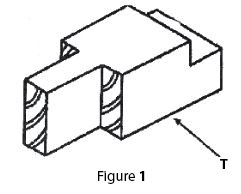
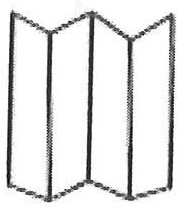
Which of the following represents the front view in the direction of arrow T?- A.
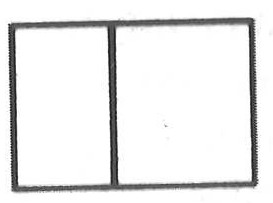
- B.
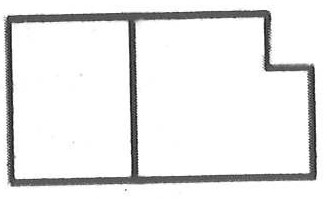
- C.
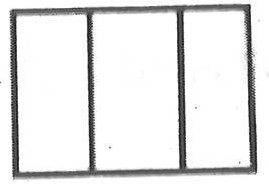
- D.
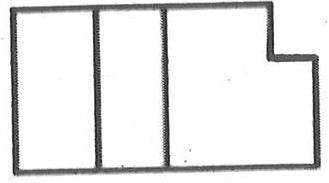
Answer: B - A.
-
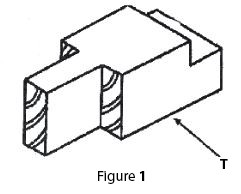
The correct plan, viewing from the top is- A.
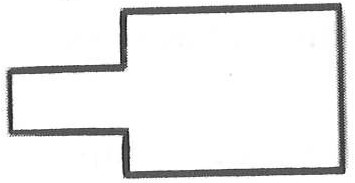
- B.
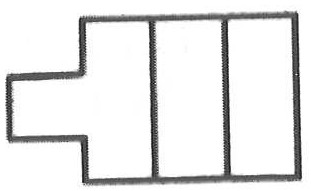
- C.
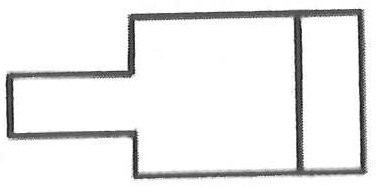
- D.
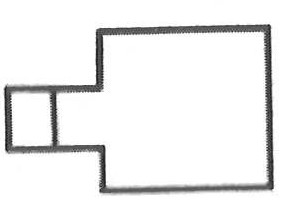
Answer: C - A.
-
When laying a table for a customer, the fork is placed
- A. in front of the plate
- B. at the right side of the plate
- C. across the plate
- D. at the left side of the plate
Answer: D -
A French seam is the most appropriate seam for
- A. children's wear
- B. heavy weight fabric
- C. light weight fabric
- D. undergarments
Answer: A -
In order to retain the nutrients in leafy vegetables
- A. cut one hour before cooking
- B. cut when ready to cook
- C. cut when the water is boiling
- D. cut few minutes before cooking
Answer: B -
Food is preserved mainly to
- A. maintain its nutrient
- B. make it last longer
- C. make it palatable
- D. protect micro-organisms in food
Answer: B
Answers and solutions for questions 11 to 30 are free in the BECE Past Questions app, with timed practice and offline study.
-
On the 6-point colour wheel, blue is next to
- A. Green
- B. Orange
- C. Yellow
- D. Red
-
Identify the pair that are principles of design.
- A. Variety and rhythm
- B. Balance and colour
- C. Repetition and dots
- D. Contrast and shape
-
The colour violet symbolizes
- A. wealth
- B. peace
- C. aggression
- D. royalty
-
The inscription BB on a pencil indicates that it
- A. is hard
- B. is soft
- C. breaks easily
- D. sharpens well
-
Which of the following depends on the principles of perspective in design?
- A. Balance
- B. Foreshortening
- C. Repetition
- D. Rhythm
-
One characteristic of aluminium is that it is
- A. brittle
- B. heavy in weight
- C. tough
- D. light in weight
-
Sand is used in mortar to
- A. increase the volume
- B. increase shrinkage
- C. harden the mortar
- D. reduce cracks
-
The most suitable timber used for decorative work is
- A. Mahogany
- B. Ofram
- C. Odum
- D. Wawa
-
The feet of a craftsman is protected in the workshop by wearing
- A. Boots
- B. Canvas
- C. Socks
- D. Sandals
-
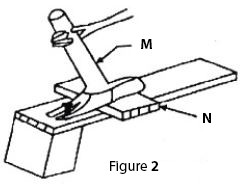
The tool labelled M is a- A. Ball pein hammer
- B. Claw hammer
- C. Club hammer
- D. Warrington hammer
-
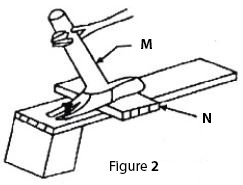
The main purpose of the piece of timber labelled N is to- A. avoid splitting the timber
- B. keep the nail straight
- C. prevent damage to the work surface
- D. prevent the handle of the hammer from breaking
-
The process of transferring the plan of a building from the drawing to the ground is called
- A. laying
- B. marking-out
- C. walling
- D. setting-out
-
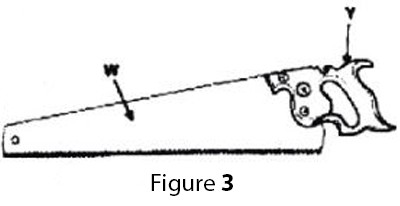
The type of saw shown in figure 3 is a- A. Cross-cut saw
- B. Dovetail saw
- C. Hacksaw
- D. Tenon saw
-
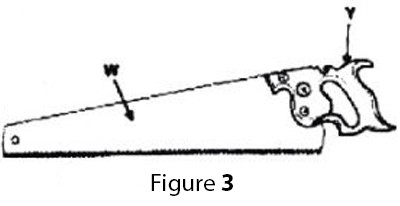
The suitable fastener used for joining the parts labelled W and Y together is- A. bolt
- B. nails
- C. rivet
- D. screw
-
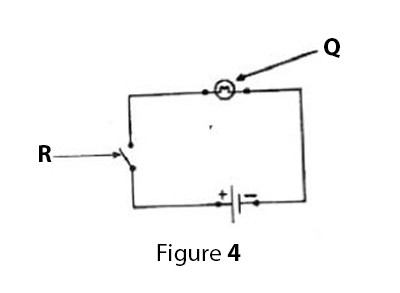
The symbol labelled Q is a- A. cell
- B. diode
- C. lamp
- D. socket
-
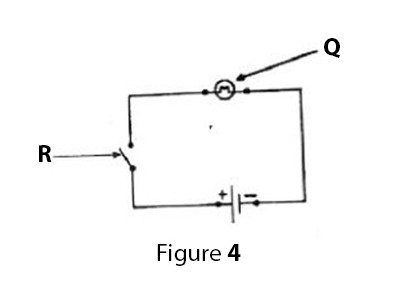
The symbol labelled R is a- A. capacitor
- B. door bell
- C. lamp holder
- D. switch
-
Which of the following is true about Third Angle Orthographic projection?
- A. Plan is below front view
- B. Plan is above front view
- C. End view is always on the right side of front view
- D. End view is always on the left side of front view
-
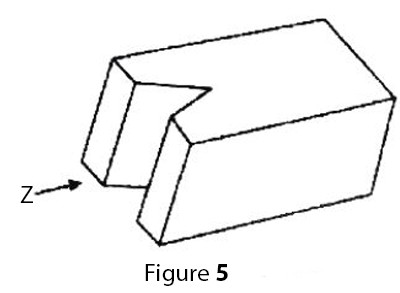
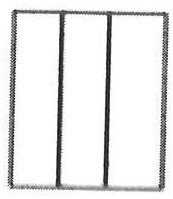
The view representing the front elevation in the direction of arrow Z is- A.
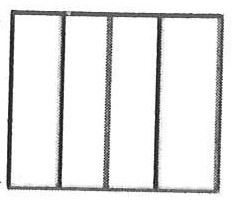
- B.
- C.
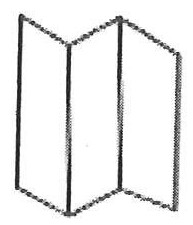
- D.
- A.
-
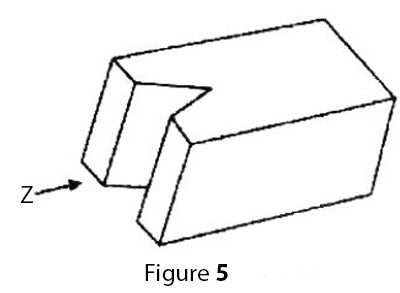
The view representing the plan is- A.
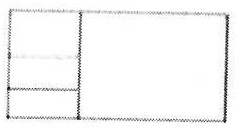
- B.
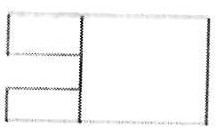
- C.
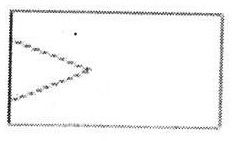
- D.
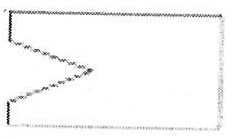
- A.
-
Which of the following instruments is used together with the tee-square to draw vertical lines?
- A. A pair of compasses
- B. Rules
- C. Protractor
- D. Set square
Paper 2: Theory
- a) State two advantages of sautéing.
b) i) State one major function of each of the following nutrients in children:
α) Carbohydrate
β) Vitamins
ii) State two uses of embroidery stitches.
c) i) Complete the table below:
INSTRUMENT ONE USE
Pair of compass
60 degrees set square
ii) List two types of business enterprise.
d) i) Define exhibition.
ii) Give two reasons why artworks are exhibited.
iii) List two types of exhibition.
iv) State one major difference between the two types of exhibition. - a) i) State two causes of accidents when using hand tools in the workshop.
ii) List four personal safety clothing items used by a craftsman.
b) i) State two grades of abrasive materials.
ii) List four types of measuring tools used in block work.
c)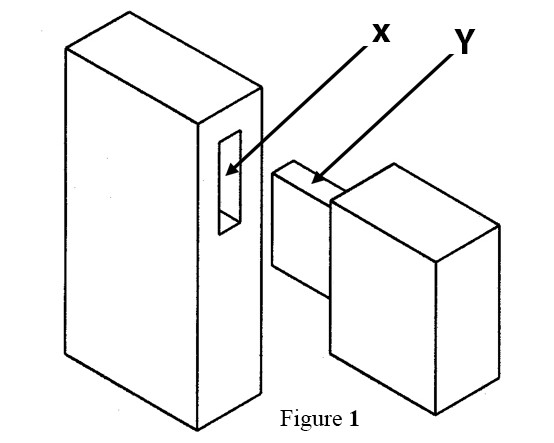
Figure 1 shows a sketch of a woodwork joint. Use it to answer questions c(i) to (iv):
i) Name the type of joint shown.
ii) Identify the parts labelled X and Y.
iii) List two types of adhesive materials that can be used to strengthen the joint.
iv) List two specific tools used for preparing the joint. - a) i)
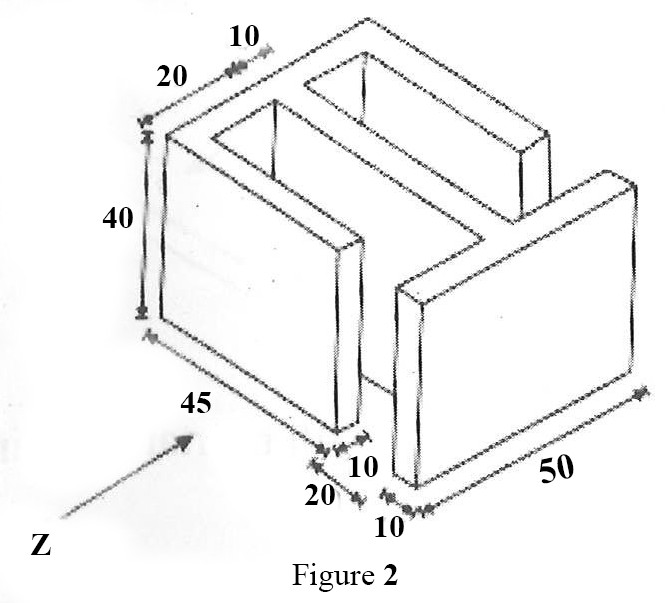
Draw full size the front view in the direction of arrow Z in First Angle Orthographic projection.
ii) Draw full size the plan.
b) i) Make a freehand pictorial sketch of a trowel.
ii) Label any two parts of the trowel sketched in (b)(i).
iii) State one use of the trowel. - a) i) State the difference between a brick and a block.
ii) List two materials used for moulding sandcrete blocks.
iii) List three tools used for moulding sandcrete blocks.
b) State one use of each of the following materials:
i) Aluminium.
ii) Copper.
c) List two tools used in each of the following operations in woodwork:
i) Preparing a smooth wooden surface.
ii) Holding a woodwork piece firmly on a bench.
d) i) Make a freehand pictorial sketch of the triangular file.
ii) Label any three parts on the sketch in (d)(i).
Worked solutions to the theory questions are free in the app.
More BECE Pre-Technical Skills papers
All 8 Pre-Technical Skills papers
 All answers free on Google Play