 BECE Past Questions
BECE 2020 Home Economics Past Questions and Answers
30 objective questions and 4 theory questions from the 2020 BECE Home Economics paper. Answers and worked solutions for questions 1 to 10 are below; the rest are free in the app.
Practise this paper free, online or offline


On an iPhone? Download on the App Store
On Android? Get it on Google Play
Paper 1: Objectives
-
The appropriate instrument used for drawing circles on paper is a
- A. pair of dividers
- B. pair of compasses
- C. protractor
- D. set square
Answer: B -
Which of the following methods of drawing is in two dimension?
- A. Isometric
- B. Oblique
- C. Orthographic
- D. Perspective
Answer: C -
In designing and making, the stage where useful information is gathered for solving the problem is
- A. analysis
- B. investigation
- C. situation
- D. specification
Answer: B -
An electronic component which indicates that current is flowing in a circuit is
- A. capacitor
- B. diode
- C. LED
- D. indicator
Answer: C -
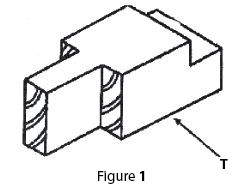
Which of the following represents the front view in the direction of arrow T?- A.
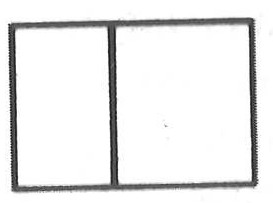
- B.
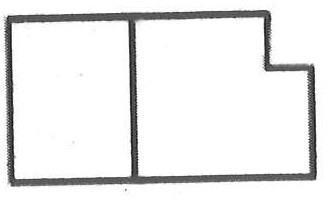
- C.
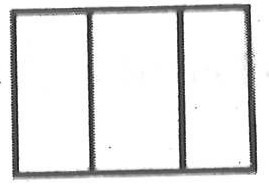
- D.
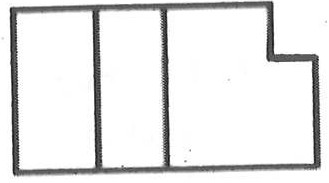
Answer: B - A.
-
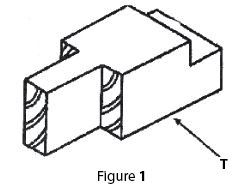
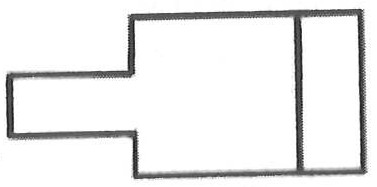
The correct plan, viewing from the top is- A.
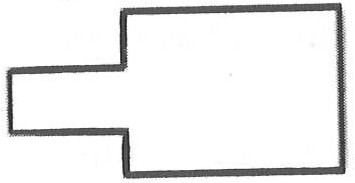
- B.
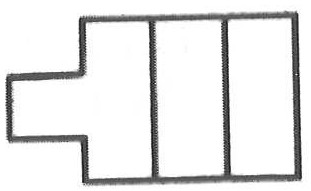
- C.
- D.
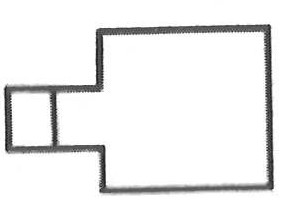
Answer: C - A.
-
When laying a table for a customer, the fork is placed
- A. in front of the plate
- B. at the right side of the plate
- C. across the plate
- D. at the left side of the plate
Answer: D -
A French seam is the most appropriate seam for
- A. children's wear
- B. heavy weight fabric
- C. light weight fabric
- D. undergarments
Answer: A -
In order to retain the nutrients in leafy vegetables
- A. cut one hour before cooking
- B. cut when ready to cook
- C. cut when the water is boiling
- D. cut few minutes before cooking
Answer: B -
Food is preserved mainly to
- A. maintain its nutrient
- B. make it last longer
- C. make it palatable
- D. protect micro-organisms in food
Answer: B
Answers and solutions for questions 11 to 30 are free in the BECE Past Questions app, with timed practice and offline study.
-
On the 6-point colour wheel, blue is next to
- A. Green
- B. Orange
- C. Yellow
- D. Red
-
Identify the pair that are principles of design.
- A. Variety and rhythm
- B. Balance and colour
- C. Repetition and dots
- D. Contrast and shape
-
The colour violet symbolizes
- A. wealth
- B. peace
- C. aggression
- D. royalty
-
The inscription BB on a pencil indicates that it
- A. is hard
- B. is soft
- C. breaks easily
- D. sharpens well
-
Which of the following depends on the principles of perspective in design?
- A. Balance
- B. Foreshortening
- C. Repetition
- D. Rhythm
-
An important factor to consider when selecting an opening for a garment is
- A. style of garment
- B. the type of fabric
- C. length of fastening
- D. colour of fastening
-
Covering puddings with grease proof paper when steaming is to
- A. make it cook quickly
- B. prevent it from sinking
- C. prevent water from entering
- D. make it rise quickly
-
A characteristic of animal fibre is that they
- A. melt at high temperature
- B. have low absorption power
- C. have high absorption power
- D. are good conductors of heat
-
An Appliqué patch is most often used on
- A. girls uniform
- B. men's shirt
- C. pair of trousers
- D. children's cotton blouse
-
Buttons and loops are best used on the back neck edge slit of
- A. school uniforms for girls
- B. nurses uniform
- C. baby's dresses
- D. blouse for the aged
-
Dish cloths are used in the kitchen for
- A. wiping working tables and boards
- B. wiping glassware and cutlery
- C. removing dishes from oven
- D. lining the ingredient tray
-
Select the dry methods of cooking from the following
- A. Braising and baking
- B. Stewing and roasting
- C. Braising and stewing
- D. Roasting and baking
-
To transfer pattern markings from paper pattern onto fabric, use
- A. Tailor's tacks
- B. Basting
- C. Tacking
- D. Even tacking
-
A suitable temporary stitch used to hold down interfacing of a round collar is
- A. Even tacking
- B. Long and short tacking
- C. Diagonal tacking
- D. Tailors tacking
-
Which of the following vitamins can easily be destroyed by heat?
- A. Vitamin A
- B. Vitamin B
- C. Vitamin D
- D. Vitamin K
-
Table linen include
- A. Cloths and napkins
- B. Crockery and table runners
- C. Table cloth and cutlery
- D. Table mats and glassware
-
A change in colour of a peeled banana left in the open is due to
- A. yeast activities
- B. presence of fungi
- C. fermentation
- D. oxidation
-
When frying meat, heat is transferred by means of
- A. radiation
- B. conduction and convection
- C. radiation
- D. conduction
-
Which of the following is a white fish?
- A. Mackerel
- B. Cod
- C. Herring
- D. Tilapia
-
A meal eaten between breakfast and lunch is
- A. High tea
- B. Snack
- C. Supper
- D. Confectioner
Paper 2: Theory
- a) State two advantages of sautéing.
b) i) State one major function of each of the following nutrients in children.
α) Carbohydrate;
β) Vitamins.
ii) State two uses of embroidery stitches.
c) i) Complete the table below.INSTRUMENT ONE USE Pair of compass 60 degrees set square
ii) List two types of business enterprise.
d) i) Define exhibition.
ii) Give two reasons why artworks are exhibited.
iii) List two types of exhibition.
iv) State one major difference between the two types of exhibition. - a) List five large sewing equipment found in a dressmaker's shop.
b) State three characteristics of a well-made buttonhole.
c) Give three advantages of taking good care of clothes.
d) Outline five ways to care for the hand sewing machine.
e) i) Differentiate between natural and synthetic fibres.
ii) Give three examples each of natural and synthetic fabrics.
f) i) State two properties of wool.
ii) Mention the two classes of stitches. - a) State four expected behaviours of a guest invited to a party.
b) Explain three advantages of practising kitchen hygiene.
c) List six mineral elements found in foods.
d) State the effect of spoilage on the following food commodities:Food Commodities Effect of Spoilage Cabbage Pawpaw Meat Milk Margarine Koose
e) State three reasons why canned food should be labelled. - a) Explain the following uses of eggs in food preparation:
i) As a glaze;
ii) As a raising agent;
iii) As an emulsifier;
iv) As a thickening agent.
b) Identify four physical characteristics of fresh meat.
c) Outline the steps in making a French seam.
d) State five ways of neatening a plain seam.
e) Name the following stitches:


Worked solutions to the theory questions are free in the app.
 All answers free on Google Play