 BECE Past Questions
BECE 2002 (Paper B) Social Studies Past Questions and Answers
40 objective questions and 6 theory questions from the 2002 (Paper B) BECE Social Studies paper. Answers and worked solutions for questions 1 to 10 are below; the rest are free in the app.
Practise this paper free, online or offline


On an iPhone? Download on the App Store
On Android? Get it on Google Play
Paper 1: Objectives
-
A drawing of any part of the earth on a flat surface is a
- A. globe
- B. scale
- C. map
- D. compass
Answer: C -
When the needle of a compass is at rest, it points to the
- A. north
- B. south
- C. east
- D. west
Answer: A -
Which of the following is a man-made feature?
- A. Ridge
- B. Bridge
- C. Lowland
- D. Mountain
Answer: B -
When the time in Accra is 6 pm, the time in Lagos will be
- A. 4 pm
- B. 5 pm
- C. 6 pm
- D. 7 pm
Answer: D -
The most densely populated country in West Africa is
- A. Ghana
- B. Nigeria
- C. Liberia
- D. Senegal
Answer: B -
A lowland between two hills is known as a
- A. valley
- B. plain
- C. ridge
- D. spur
Answer: A -
When a scale of a map is expressed as 1:1000, it is referred to as
- A. statement scale
- B. representative fraction scale
- C. scale bar
- D. linear scale
Answer: B -
Rocks which are formed in layers are known as
- A. porous rocks
- B. igneous rocks
- C. metamorphic rocks
- D. sedimentary rocks
Answer: D -
Longitude 0° is also known as the
- A. Tropic of Cancer
- B. Tropic of Capricorn
- C. Greenwich Meridian
- D. International Date Line
Answer: C -
Express 2 pm as Greenwich Mean Time (GMT)
- A. 1400 hours GMT
- B. 1600 hours GMT
- C. 1800 hours GMT
- D. 2000 hours GMT
Answer: A
Answers and solutions for questions 11 to 40 are free in the BECE Past Questions app, with timed practice and offline study.
-
On an atlas map all water bodies are coloured
- A. blue
- B. yellow
- C. green
- D. brown
-
Which of the following countries in West Africa is landlocked?
- A. Mali
- B. Nigeria
- C. Ghana
- D. Sierra Leone
-
In which country does the River Nile enter the sea?
- A. Kenya
- B. Ethiopia
- C. Egypt
- D. Sudan
-
A highland which has a steep slope on one side and a gentle slope on the other side is called
- A. a plateau
- B. an escarpment
- C. a ridge
- D. a conical hill
-
Which of the following rivers in Ghana does not directly enter the sea?
- A. Ankobra
- B. Oti
- C. Tano
- D. Pra
-
Which of the following festivals is celebrated by the people of Navrongo?
- A. Homowo
- B. Kundum
- C. Bungum
- D. Foo
-
Environmental pollution is caused by all the following except
- A. smoking of cigarettes
- B. making of loud noise
- C. dumping of refuse
- D. watering of flower garden
-
How many years is it from 500 BC to 900 AD?
- A. 400 years
- B. 500 years
- C. 900 years
- D. 1400 years
-
An event which was recorded on 10th December 1999, happened in the
- A. 10th century
- B. 12th century
- C. 19th century
- D. 20th century
-
Which of the following can be described as a peace officer?
- A. A soldier
- B. A policeman
- C. A prison warden
- D. A court registrar
-
In a traditional African community the chief speaks through
- A. the linguist
- B. an elder
- C. a fetish-priest
- D. the queen-mother
-
After how many years of existence does an institution celebrate its golden jubilee?
- A. 25 years
- B. 50 years
- C. 75 years
- D. 100 years
-
Which of the following factors has effectively reduced infant mortality in Ghana?
- A. Availability of hospital equipment
- B. Environmental sanitation
- C. Eating of balanced diet
- D. Immunization against the six killer diseases
-
In the matrilineal system of inheritance, children inherit the property of their
- A. father’s mother
- B. father’s brother
- C. mother’s brother
- D. mother’s father
-
Which of the following is not part of the natural environment?
- A. Rivers
- B. Roads
- C. Mountains
- D. Vegetation
-
The Aborigines Rights Protection Society was formed to
- A. oppose the Lands Bill
- B. defend the Fante Chiefs
- C. fight for independence from the Asante
- D. drive the British out of Ghana
-
In 1900 the Asante fought the British under the leadership of the queen-mother of
- A. Ejisu
- B. Kokofu
- C. Juaben
- D. Mampong
-
Which of the following Western Sudanese states was ruled by Mansa Musa?SOLUTION keys B (Songhai), which is wrong: Mansa Musa ruled Mali.
- A. Ghana
- B. Songhai
- C. Mali
- D. Bornu
-
In which war were the Anlo defeated by the Danes?
- A. Dodowa war
- B. Datsutagba war
- C. Sagrenti war
- D. Sagbadre war
-
The first person appointed to represent the British government in the Gold Coast was
- A. Sir Charles McCarthy
- B. Sir Arden Clarke
- C. Sir Garnet Wolseley
- D. Captain George Maclean
-
Who was the first chairman of the United Gold Coast Convention?
- A. Kwame Nkrumah
- B. J. B. Danquah
- C. Obetsebi Lamptey
- D. George Paa Grant
-
In the seventeenth century the first capital of the Ga state was
- A. Pokuase
- B. Bortianor
- C. Abokobi
- D. Ayawaso
-
The Asante kingdom became an empire during the reign of
- A. Obiri Yeboah
- B. Osei Tutu I
- C. Osei Kodwo
- D. Opoku Ware I
-
The president of the first republic of Ghana was
- A. Dr. J. B. Danquah
- B. Dr. Hilla Limann
- C. Dr. Kwame Nkrumah
- D. Dr. K. A. Busia
-
The headquarters of the League of Nations was situated in
- A. New York
- B. Moscow
- C. Geneva
- D. Washington D.C.
-
The first person to be appointed the Secretary-General of the United Nations Organization was
- A. Dag Hammarskjold
- B. U'Thant
- C. Trygve Lie
- D. Peres de Cuellar
-
Non-permanent members of the Security Council of the United Nations Organization hold office for a period of
- A. two years
- B. three years
- C. four years
- D. five years
-
The Jos Plateau in Nigeria is noted for the production of
- A. coal
- B. diamond
- C. tin
- D. bauxite
-
In which city was the treaty establishing the ECOWAS signed?
- A. Lagos
- B. Accra
- C. Lome
- D. Abidjan
-
The leading producer of copper in Africa is
- A. Zambia
- B. Namibia
- C. Sudan
- D. Morocco
Paper 2: Theory
- Use the rainfall graph below to answer the questions that follow: The graph below shows the rainfall distribution of Station A
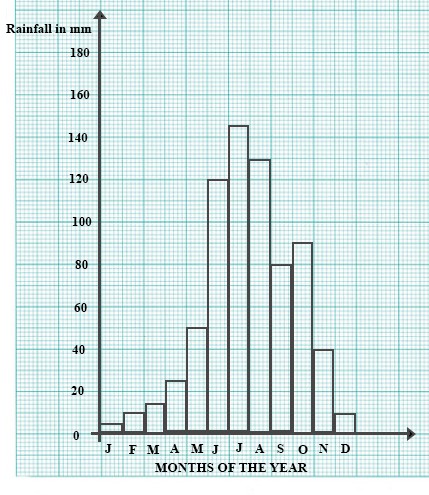
a) Calculate the average rainfall for the first half of the year
b) Find the total rainfall from July to the end of the year
c) Which two months of the year have equal amounts of rainfall?
d) Describe the pattern of the rainfall distribution. - a) Draw a sketch map of Ghana
b) On your sketch map, show and name
i) the Savanna grassland vegetation zone;
ii) Tamale and Bawku
c) i) Name any two cash crops produced in the Savanna grassland.
ii) State two ways in which one of the cash crops you named is of economic importance. - a) Mention four offences against the individual and four against the state.
b) State four reasons why a country makes laws for its citizens. - a) What four factors led to the growth of the Old Ghana Empire?
b) State four factors that caused the fall of the Old Ghana Empire. - a) State any four aims of the Organization of African Unity (OAU).
b) Explain any four problems facing the Organization of African Unity (OAU). - a) Describe four functions of the Food and Agricultural Organization (FAO).
b) Name two countries which have insufficient food to feed their people.
c) Give two reasons why poor countries should not always receive free food aid.
Worked solutions to the theory questions are free in the app.
 All answers free on Google Play