 BECE Past Questions
BECE 2018 Re-sit Pre-Technical Skills Past Questions and Answers
30 objective questions and 4 theory questions from the 2018 Re-sit BECE Pre-Technical Skills paper. Answers and worked solutions for questions 1 to 10 are below; the rest are free in the app.
Practise this paper free, online or offline


On an iPhone? Download on the App Store
On Android? Get it on Google Play
Paper 1: Objectives
-
Which of the following projections shows views in two-dimensions?
- A. Isometric
- B. Oblique
- C. Orthographic
- D. Perspective
Answer: C -
A short statement which describes what a designer intends to design and make is termed as
- A. analysis
- B. brief
- C. situation
- D. specification
Answer: B -
Which of the following serves as a source of energy for a torch light?
- A. Bulb
- B. Capacitor
- C. Cell
- D. Inductor
Answer: C -
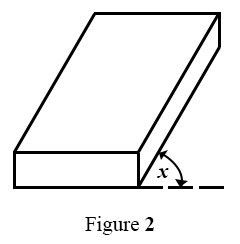
The object is projected in- A. oblique
- B. isometric
- C. one-point perspective
- D. two-point perspective
Answer: A -
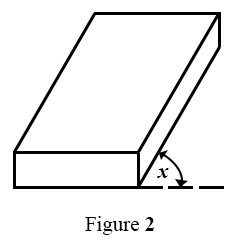
The angle marked x is- A. 15°
- B. 30°
- C. 45°
- D. 60°
Answer: C -
The factor to consider when specifying for size of a unit is
- A. appearance
- B. construction
- C. function
- D. ergonomics
Answer: D -
In taking body measurement, a firm tape measure is needed to
- A. save time
- B. avoid wasting fabric
- C. obtain accuracy
- D. make sewing easy
Answer: C -
A suitable fruit for making jam is
- A. guava
- B. grapefruit
- C. watermelon
- D. orange
Answer: A -
The process of repairing or mending faults such as breaks and tears in clothing is referred to as ......
- A. remodelling
- B. patching
- C. darning
- D. renovation
Answer: D -
The methods of cooking that are common used in Ghana are
- A. steaming and boiling
- B. boiling and frying
- C. baking and boiling
- D. boiling and roasting
Answer: B
Answers and solutions for questions 11 to 30 are free in the BECE Past Questions app, with timed practice and offline study.
-
Drawing and painting are grouped under
- A. two-dimensional work
- B. three-dimensional work
- C. landscape
- D. still life
-
Any two primary colours mixed together in equal proportions produce a
- A. complementary colour
- B. secondary colour
- C. tint colour
- D. neutral colour
-
Identify a drawing tool from the following items
- A. Crayon
- B. Paper
- C. Palette
- D. Ruler
-
Select a neutral colour from the options below.
- A. Blue
- B. Orange
- C. Red
- D. White
-
A vertical line is associated with
- A. movement
- B. rest
- C. stability
- D. uncertainty
-
The reason for introducing racking back in wall is to
- A. increase the strength of the wall
- B. prevent vertical continuous joint
- C. break the wall in future
- D. continue the wall in future
-
The difference between bricks and blocks is that
- A. bricks are made of clay
- B. bricks are smaller than blocks
- C. blocks are made of cement
- D. blocks are smaller than bricks
-
The purpose of cement in mortar is to
- A. bind the materials together
- B. increase the volume together
- C. remove the impurities in the materials
- D. allow the mortar to flow
-
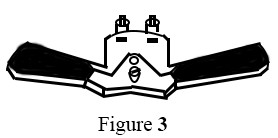
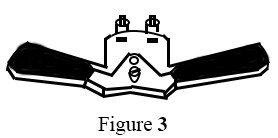
The sketch shows a- A. marking gauge
- B. rasp
- C. spokeshave
- D. smoothing plane
-
The tool is used on- A. blocks
- B. glass
- C. metal
- D. wood
-
Non-ferrous alloys include
- A. aluminium
- B. copper
- C. mild steel
- D. soft solder
-
The tinman's snips is used for
- A. cutting metal plates
- B. cutting thin sheets
- C. folding thin sheets
- D. shaping sheet metals
-
Saucepan handles are made from plastics because plastics are
- A. heavy handle
- B. light to handle
- C. poor conductors of heat
- D. good conductors of heat
-
Which of the following is a personal safety practice?
- A. Wearing strong boots
- B. Wearing loose clothing
- C. Leaving tools on the bench
- D. Cleaning tools after use
-
A switch is used for
- A. increasing the flow of current
- B. reducing the flow of current
- C. opening and closing a circuit
- D. providing energy for a circuit
-
The line used to indicate the centre of an object drawn is
- A. continuous thick
- B. continuous thin
- C. long chain
- D. short dashes
-
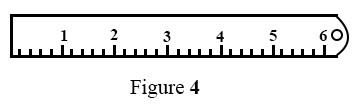
The tool shown in Figure 4 is a- A. cutting tool
- B. measuring tool
- C. marking out tool
- D. setting out tool
-
Developed surface are constructed by using
- A. base lengths
- B. vertical heights
- C. slant sides
- D. true lengths
-
The appropriate file for filing stepped corners is
- A. hand file
- B. flat file
- C. round file
- D. square file
-
The electrical device that protects electrical appliances is
- A. diode
- B. fuse
- C. plug
- D. switch
Paper 2: Theory
- a) Identify the three main uses of permanent stitches.
b) State any three sources of vitamin B1 in a diet.
c) (i) Complete the table below:
# OPERATION ONE INSTRUMENT USED TO PERFORM THE OPERATION
(1) Drawing horizontal lines
(2) Measuring angles
(3) Drawing circles
(4) Holding paper firmly on drawing boards
(ii) Name one example of each of the following solid figures:
(α) prism
(β) pyramid
d) (i) List the three primary colours of light.
(ii) Explain secondary colours.
(iii) State two uses of colours. - a) (i) Make a freehand pictorial sketch of a builder's square.
(ii) Label two parts of the builder's square sketched in (a)(i).
(iii) State one method of caring for a builder's square.
b) (i) State the difference between ferrous metals and non-ferrous metals.
(ii) List two examples each of ferrous metals and non-ferrous metals.
c) (i) State the difference between thermoplastics and thermosetting plastics.
(ii) List two examples each of thermoplastics and thermosetting plastics. - a)
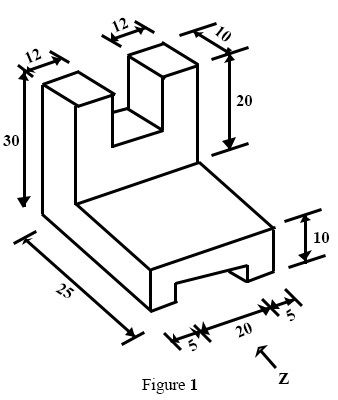
Figure 1 shows the pictorial view of a wooden block
Draw full-size views in the Third Angle Orthographic Projection:
(i) Front elevation
(ii) Plan.
b) State one reason for carrying out each of the following operations:
(i) Measuring a workpiece
(ii) Marking out a workpiece
(iii) Finishing a workpiece.
c) State one use of each of the following electrical components:
(i) Fuse
(ii) Switch
(iii) Battery. - a) (i) Make a freehand pictorial sketch of a cross-cut saw.
(ii) Label any three parts of the cross-cut saw sketched in question (a)(i).
(iii) State one use of the cross-cut saw.
b) Copy and complete the table below:
ARTICLE ONE SPECIFIC PLASTIC FOR MAKING THE ARTICLE
I. Electric plug
II. Water-proof jacket
III. Safety glasses
IV. Saucepan handle
c) Sketch the representative symbol of the following electrical components:
(i) Cell
(ii) Lamp
(iii) Resistor.
Worked solutions to the theory questions are free in the app.
 All answers free on Google Play