 BECE Past Questions
BECE 2006 Mathematics Past Questions and Answers
40 objective questions and 6 theory questions from the 2006 BECE Mathematics paper. Answers and worked solutions for questions 1 to 10 are below; the rest are free in the app.
Practise this paper free, online or offline


On an iPhone? Download on the App Store
On Android? Get it on Google Play
Paper 1: Objectives
-
𝐐 = {𝟏, 𝟑, 𝟓, 𝟕, 𝟗, 𝟏𝟏, 𝟏𝟑, 𝟏𝟓} and 𝐑 = {𝟏, 𝟐, 𝟑, 𝟓, 𝟔, 𝟕, 𝟏𝟎, 𝟏𝟏, 𝟏𝟐}. Find 𝐐 ∩ 𝐑
- A. {𝟏, 𝟑, 𝟓, 𝟕, 𝟏𝟏}
- B. {𝟏, 𝟑, 𝟓, 𝟕, 𝟗, 𝟏𝟏}
- C. {𝟐, 𝟒, 𝟖, 𝟗, 𝟏𝟑, 𝟏𝟒}
- D. {𝟏, 𝟐, 𝟑, 𝟓, 𝟔, 𝟕, 𝟗, 𝟏𝟎, 𝟏𝟏, 𝟏𝟐}
Answer: AIntersection (∩) are elements that can be found in both sets. 𝐐 ∩ 𝐑 = {𝟏, 𝟑, 𝟓, 𝟕, 𝟏𝟏}. -
If 𝑥 is an integer, list the members of the set, {𝟐 ≤ 𝑥 < 𝟏𝟎}.
- A. {𝟑, 𝟒, 𝟓, 𝟔, 𝟕, 𝟖, 𝟗}
- B. {𝟐, 𝟑, 𝟒, 𝟓, 𝟔, 𝟕, 𝟖, 𝟗}
- C. {𝟑, 𝟒, 𝟓, 𝟔, 𝟕, 𝟖, 𝟗, 𝟏𝟎}
- D. {𝟐, 𝟑, 𝟒, 𝟓, 𝟔, 𝟕, 𝟖, 𝟗, 𝟏𝟎}
Answer: B𝟐 ≤ 𝑥 < 𝟏𝟎 includes all integers from 𝟐 up to but not including 𝟏𝟎: {𝟐, 𝟑, 𝟒, 𝟓, 𝟔, 𝟕, 𝟖, 𝟗}. -
Simplify (𝟒/𝟑)𝑥 - (𝟐/𝟗)𝑥
- A. (𝟐/𝟗)𝑥
- B. (𝟐/𝟑)𝑥
- C. (𝟏𝟎/𝟗)𝑥
- D. (𝟏𝟒/𝟗)𝑥
Answer: C(𝟒/𝟑)𝑥 - (𝟐/𝟗)𝑥 = (𝟒𝑥 × 𝟑 - 𝟐𝑥 × 𝟏)/𝟗 = (𝟏𝟐𝑥 - 𝟐𝑥)/𝟗 = 𝟏𝟎𝑥/𝟗 = (𝟏𝟎/𝟗)𝑥. -
The number of boys in a school is 𝟏𝟐𝟎. If the ratio of boys to girls is 𝟓 : 𝟕, find the total number of students in the school.
- A. 𝟐𝟒𝟎
- B. 𝟐𝟖𝟖
- C. 𝟔𝟎𝟎
- D. 𝟖𝟒𝟎
Answer: BTotal students = sum of ratios. 𝟏𝟐 × 𝟐𝟒 = 𝟐𝟖𝟖. -
Find the circumference of a circle with radius 𝟑.𝟓 cm. (Take π = 𝟐𝟐/𝟕)
- A. 𝟏𝟏 cm
- B. 𝟐𝟐 cm
- C. 𝟑𝟓 cm
- D. 𝟑𝟖.𝟓 cm
Answer: BCircumference = 𝟐π𝑟 = 𝟐𝟐 cm. -
Which of the following are the prime factors of 𝟏𝟐?
- A. {𝟏, 𝟑}
- B. {𝟐, 𝟑}
- C. {𝟐, 𝟒, 𝟔, 𝟏𝟐}
- D. {𝟐, 𝟑, 𝟒, 𝟔}
Answer: BPrime factors of 𝟏𝟐 are {𝟐, 𝟑}. -
The base of an isosceles triangle is 𝟕 cm. Each of the other two sides is 𝑥 cm. What is the expression for its perimeter?
- A. 𝑥 + 𝟕
- B. 𝑥 + 𝟏𝟒
- C. 𝟐𝑥 - 𝟕
- D. 𝟐𝑥 + 𝟕
Answer: D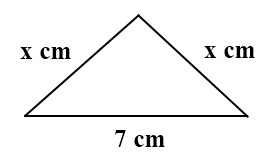
Perimeter = 𝑥 + 𝑥 + 𝟕 = 𝟐𝑥 + 𝟕. -
Correct 𝟎.𝟎𝟎𝟑𝟖𝟓𝟖 to three significant figures.
- A. 𝟎.𝟎𝟎𝟑𝟖𝟓
- B. 𝟎.𝟎𝟎𝟑𝟖𝟔
- C. 𝟎.𝟎𝟎𝟑𝟗
- D. 𝟑𝟖𝟔
Answer: BThe third significant figure is 𝟓; next is 𝟖, so it rounds to 𝟔. -
Find the value of 𝑎 - 𝟑𝑎𝑏 when 𝑎 = -𝟐 and 𝑏 = 𝟑
- A. -𝟐𝟎
- B. -𝟏𝟔
- C. 𝟏𝟔
- D. 𝟐𝟎
Answer: C𝑎 - 𝟑𝑎𝑏 = -𝟐 - 𝟑(-𝟐 × 𝟑) = 𝟏𝟔. -
A boy sold oranges at three for ₵𝟓𝟎𝟎. If his total sales were ₵𝟏𝟎𝟎,𝟎𝟎𝟎, how many oranges did he sell?
- A. 𝟑𝟎𝟎
- B. 𝟒𝟎𝟎
- C. 𝟓𝟎𝟎
- D. 𝟔𝟎𝟎
Answer: D₵𝟏𝟎𝟎,𝟎𝟎𝟎 ÷ ₵𝟓𝟎𝟎 = 𝟐𝟎𝟎 × 𝟑 = 𝟔𝟎𝟎 oranges.
Answers and solutions for questions 11 to 40 are free in the BECE Past Questions app, with timed practice and offline study.
-
A train travels at 𝟖𝟎 km per hour. How long will it take to travel 𝟑𝟐𝟎 km?
- A. 𝟐 hours
- B. 𝟑 hours
- C. 𝟒 hours
- D. 𝟓 hours
-
Which of the following is a rhombus?
- A.
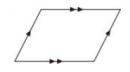
- B.
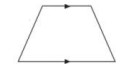
- C.
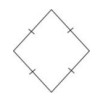
- D.
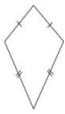
- A.
-
Three children share ₵𝟗𝟏𝟎,𝟖𝟎𝟎 in the ratio 𝟐 : 𝟑 : 𝟒. What is the highest share?
- A. ₵𝟐𝟎𝟐,𝟒𝟎𝟎
- B. ₵𝟑𝟎𝟑,𝟔𝟎𝟎
- C. ₵𝟒𝟎𝟒,𝟖𝟎𝟎
- D. ₵𝟒𝟓𝟓,𝟒𝟎𝟎
-
The next term in the sequence 𝟑, 𝟔, 𝟏𝟐, 𝟐𝟒, ...
- A. 𝟐𝟕
- B. 𝟑𝟎
- C. 𝟑𝟔
- D. 𝟒𝟖
-
Express 𝟑𝟓𝟎 as a product of prime factors.
- A. 𝟐 × 𝟓 × 𝟕
- B. 𝟐 × 𝟓 × 𝟓 × 𝟕
- C. 𝟐 × 𝟓² × 𝟕
- D. 𝟐³ × 𝟓 × 𝟕
-
Express 𝟗𝟔𝟐 in standard form.
- A. 𝟗𝟔.𝟐 × 𝟏𝟎
- B. 𝟗.𝟔𝟐 × 𝟏𝟎²
- C. 𝟎.𝟗𝟔𝟐 × 𝟏𝟎³
- D. 𝟎.𝟎𝟗𝟔𝟐 × 𝟏𝟎⁴
-
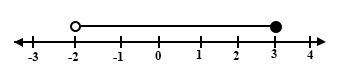
Which of the following inequalities is shown on the number line where p ∈ {real numbers}?- A. -𝟐 < 𝑝 < 𝟑
- B. -𝟐 ≤ 𝑝 > 𝟑
- C. -𝟐 < 𝑝 ≤ 𝟑
- D. -𝟐 > 𝑝 ≥ 𝟑
-
Solve the equation (𝑥 + 𝟐)/𝟑 + 𝟐𝑥 = 𝟏𝟎.
- A. 𝟑
- B. 𝟒
- C. 𝟓
- D. 𝟔
-
Arrange the fractions 𝟑/𝟕, 𝟐/𝟓, 𝟒/𝟓 in ascending order.
- A. 𝟑/𝟕, 𝟒/𝟓, 𝟐/𝟓
- B. 𝟒/𝟓, 𝟐/𝟓, 𝟑/𝟕
- C. 𝟒/𝟕, 𝟑/𝟓, 𝟐/𝟕
- D. 𝟐/𝟓, 𝟑/𝟕, 𝟒/𝟓
-
Express 𝟖𝟕 base ten as a base five numeral.
- A. 𝟑𝟎𝟐₅
- B. 𝟑𝟐𝟐₅
- C. 𝟑𝟎𝟐𝟐₅
- D. 𝟑𝟐𝟎𝟐₅
-
A bag contains 6 blue and 5 black balls. What is the probability of picking a black ball at random?
- A. ¹/₁₁
- B. ¹/₅
- C. ⁵/₁₁
- D. ⁶/₁₁
-
Evaluate (2³ × 3³) / (2 × 2 × 3)
- A. 6
- B. 9
- C. 12
- D. 18
-
The table below gives the ages of members of a juvenile club. How many people are in the club?{"frequency":[5,10,6,9],"age_in_years":[8,9,10,11]}
- A. 15
- B. 20
- C. 30
- D. 38
-
What is the modal age of the members of the club?{"frequency":[5,10,6,9],"age_in_years":[8,9,10,11]}
- A. 8 years
- B. 9 years
- C. 10 years
- D. 11 years
-
In an examination, 154 out of 175 candidates passed. What percentage failed?
- A. 6%
- B. 12%
- C. 13%
- D. 18%
-
Expand (6 - x)(6 + y)
- A. 36 - 6x + 6y - xy
- B. 36 - 6x - 6y + xy
- C. 36 - 6x - xy
- D. 36 + 6y - xy
-
Find the highest common factor (HCF) of 20, 12, and 28.
- A. 2
- B. 4
- C. 8
- D. 12
-
If F = ⁹/₅ C + 32, find F when C = 40.
- A. 49
- B. 78.4
- C. 104
- D. 129.6
-
Evaluate ²/₃ (27 - 12) - 6.
- A. 4
- B. 6
- C. 14
- D. 16
-
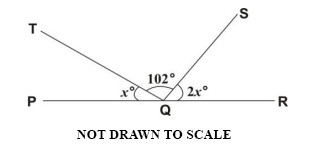
In the figure, PQR is a straight line. Angle TQP = x, angle TQS = 102°, and angle SQR = 2x°. Find the value of x.- A. 78
- B. 39
- C. 34
- D. 26
-
Factorize 22ab - 11ac + 6rb - 3rc.
- A. (2b - c)(11a + 3r)
- B. (2b + c)(11a - 3r)
- C. (2b - c)(11a - 3r)
- D. (2b + c)(11a + 3r)
-
Find the sum of 124.3, 0.275, and 74.06, correct to one decimal place.
- A. 198.6
- B. 198.7
- C. 892.0
- D. 892.4
-
Simplify 6p³ / 3p².
- A. 2p
- B. 3p
- C. 18p
- D. 27p
-
Mr. Nkrumah saved ₵75,000 at a simple interest rate of 20% per annum for 3 years. Calculate the interest earned.
- A. ₵15,000.00
- B. ₵30,000.00
- C. ₵45,000.00
- D. ₵60,000.00
-
Find the rule for the mapping: n → y where y = 10, 21, 32, 43, 54 for n = 1, 2, 3, 4, 5.
- A. n → 10n
- B. n → (10n + 1)
- C. n → (11n - 1)
- D. n → (7n + 3)
-
What is the value of the digit 9 in the number 624.93?
- A. 9 hundreds
- B. 9 tens
- C. 9 units
- D. 9 tenths
-
The marks obtained by 5 girls in a test are: 10, 15, 8, 18, 12. Find the median mark.
- A. 10
- B. 11
- C. 12
- D. 15
-
The point P(3, 4) is translated by the vector (3, -2) to a new position P'. Find the coordinates of the image.
- A. (0, 2)
- B. (6, -2)
- C. (6, 2)
- D. (6, 6)
-
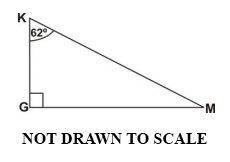
In the diagram, KGM is a right-angled triangle and ∠GKM = 62°. Find the angle of elevation of K from M.- A. 28°
- B. 62°
- C. 90°
- D. 118°
-
Given vector (2, -3) and vector (-1, 4), find 2 × (2, -3) + (-1, 4).
- A. (0, 2)
- B. (6, 2)
- C. (-2, 5)
- D. (3, -2)
Paper 2: Theory
- (a) A trader sold 250 articles for ₵525,000.00 at a profit of 25%.
(i) Calculate the cost price of each article.
(ii) If the trader had wanted 45% profit on the cost price, how much should he have sold each of the articles?
(b) Find the simple interest on ₵880,000.00 for 2½ years at 3¾% per annum. - (a) The ratio of men to women in a village is 12:25. If there are 120 men,
(i) how many women are there?
(ii) what is the total number of men and women?
(b) A bag contains 70 pencils, out of which 15 are green and 30 blue.
(i) How many pencils of other colours are in the bag?
(ii) A pencil is selected from the bag at random. What is the probability that it is blue?
(c) Solve (1/3)(x - 1) - (1/2)(x - 3) ≤ 1 1/4, and illustrate your answer on the number line. - (a) Using a pair of compasses and ruler only, construct triangle XYZ with XZ = 12 cm, XY = 10 cm, and angle XYZ = 90°.
(ii) Measure YZ.
(iii) Calculate the area of triangle XYZ.
(iv) Measure angle ZXY.
(b) An isosceles triangle has a perimeter of (9y - 15) cm. What is the length of each of the two equal sides if its third side is (3y - 7) cm? - (a) The mapping below has the rule, y = 2x + 3.
x 0 1 2 3 4 y - 5 7 - -
Fill in the missing values for the mapping.
(b) Using a scale of 2 cm to 1 unit on both axes, draw perpendicular axes and plot the points from the mapping.
Find (i) y when x = 3.5; (ii) x when y = 8; (iii) the gradient of the line y = 2x + 3. - (a) A man spent ¼ of his monthly salary on rent, ⅖ on food, and ⅙ on books. If he still had ₵55,000 left, what was his monthly salary?
(b) The average age of a family of eight is 30 years. The average age of the six children in the family is 19 years. If the mother is four years younger than the father, calculate the age of the father. - (a) The following table shows the distribution of grades obtained by 120 students in an examination.
Grade: {A, B, C, D}
No. of students: {14, 30, 52, 24}
Draw a pie chart for the distribution.
(b) (i) Evaluate: 5¾ - 2⅔ + 1⅕
(ii) Factorize: xy - xz + 5y - 5z.
Worked solutions to the theory questions are free in the app.
 All answers free on Google Play