 BECE Past Questions
BECE 1995 Social Studies Past Questions and Answers
40 objective questions and 6 theory questions from the 1995 BECE Social Studies paper. Answers and worked solutions for questions 1 to 10 are below; the rest are free in the app.
Practise this paper free, online or offline


On an iPhone? Download on the App Store
On Android? Get it on Google Play
Paper 1: Objectives
-
Which of the following latitudes almost divides the African continent into two equal halves?
- A. Tropic of Cancer
- B. Tropic of Capricorn
- C. Equator
- D. Prime Meridian
- E. Arctic Circle
Answer: C -
Which of the following is important in the manufacture of cutting tools?
- A. Tin
- B. Iron
- C. Silver
- D. Lead
- E. Diamond
Answer: E -
Children under the age of five years should be immunized against all the following diseases except
- A. Polio
- B. Tetanus
- C. Cholera
- D. Diphtheria
- E. Whooping cough
Answer: C -
The League of Nations was formed immediately after the
- A. Middle East War
- B. Gulf War
- C. First World War
- D. Second World War
- E. Falkland War
Answer: C -
The main means of transportation in The Gambia is
- A. road
- B. rail
- C. air
- D. water
- E. caravan
Answer: D -
The Asantes were led in a war against the British in 1900 by
- A. Osei Tutu
- B. Osei Kodwo
- C. Kwasi Obodum
- D. Nana Afriyie
- E. Yaa Asantewa
Answer: E -
If the time in Accra on longitude zero degree is 2:30 pm the time in Cairo on longitude 30° E will be
- A. 4:30 pm
- B. 5:30 pm
- C. 6:30 pm
- D. 7:30 pm
- E. 8:30 pm
Answer: A -
Which of the following is not a cereal crop?
- A. Rice
- B. Maize
- C. Wheat
- D. Millet
- E. Coffee
Answer: E -
Malnutrition among children often results in
- A. Polio
- B. Tetanus
- C. Measles
- D. Kwashiorkor
- E. Malaria
Answer: D -
Aluminium is obtained from
- A. copper ore
- B. tin ore
- C. iron ore
- D. gold
- E. bauxite
Answer: E
Answers and solutions for questions 11 to 40 are free in the BECE Past Questions app, with timed practice and offline study.
-
Which organ of the Organization of African Unity (OAU) has the highest authority?
- A. General Secretariat
- B. The Council of Ministers
- C. The Assembly of Heads of States and Governments
- D. The Commission of Peace
- E. The Mediation Commission
-
The capital of the old Ghana Empire was
- A. Walata
- B. Timbuktu
- C. Jeriba
- D. Diara
- E. Kumbi Saleh
-
The United Nations Day is celebrated every year on
- A. 24th October
- B. 24th November
- C. 24th December
- D. 24th January
- E. 24th February
-
Which of the following areas in Ghana is most likely to experience relief rainfall?
- A. Lowlands
- B. Accra Plains
- C. Northern Lowlands
- D. Kwahu Scarp
- E. Afram Plains
-
The British Togoland joined Ghana in the year
- A. 1948
- B. 1951
- C. 1956
- D. 1957
- E. 1961
-
Who was the Head of State of Ghana between 1954 and 1960?
- A. Dr Kwame Nkrumah
- B. Dr J. B. Danquah
- C. The Queen of Britain
- D. Dr K. A. Busia
- E. Mr T. Hutton Mills
-
The most important commercial crop in Ghana is
- A. sheanut
- B. cocoa
- C. cola nut
- D. coffee
- E. groundnut
-
The Bond of 1844 was a peace agreement signed between the people of Southern Ghana and
- A. Captain George Maclean
- B. Sir Alan Burns
- C. Sir Gordon Guggisberg
- D. Sir Charles McCarthy
- E. Commander Hill
-
The country which shares a common border with Ghana in the North is
- A. Cote d'Ivoire
- B. Togo
- C. Nigeria
- D. Burkina Faso
- E. Mali
-
The largest vegetation type in Ghana is
- A. Sahel savanna
- B. Guinea savannah
- C. Mangrove forest
- D. Coastal thicket
- E. Evergreen forest
-
The coastal wind which blows from land towards the sea at night is called
- A. Harmattan
- B. Sea Breeze
- C. South-West Monsoon
- D. Land Breeze
- E. Easterly Winds
-
The meeting point of two rivers is called the
- A. mouth
- B. drainage
- C. source
- D. terminus
- E. confluence
-
Which of the following is a bad effect of heavy rainfall?
- A. Provision of potable water
- B. Provision of water for irrigation
- C. Increasing the volume of streams
- D. Causing erosion of soil
- E. Promotion of plant growth
-
The Poll Tax Ordinance failed because the
- A. chiefs did not agree with the British to levy tax
- B. people had no money to pay the tax
- C. British used the money to support the Asantes against the Fantes
- D. tax was too high for the people
- E. chiefs did not inform their people about the levy before the law was passed
-
Which of the following is not an element of the weather?
- A. Rain
- B. Wind
- C. Thermometer
- D. Sunshine
- E. Cloud
-
Which of the following is a secondary economic activity?
- A. Forestry
- B. Fishing
- C. Quarrying
- D. Ranching
- E. Manufacturing
-
Which of the following types of timber is not found in the tropical forest of West Africa?
- A. Mahogany
- B. Spruce
- C. Wawa
- D. Odum
- E. Sapele
-
The most important mineral product of the Niger Delta is
- A. Petroleum
- B. Tin
- C. Coal
- D. Bauxite
- E. Zinc
-
Fish can be preserved in the following ways except by
- A. smoking
- B. salting
- C. drying
- D. cooking
- E. freezing
-
Which of the following is not a main food crop cultivated in Ghana?
- A. Maize
- B. Plantain
- C. Cocoyam
- D. Wheat
- E. Rice
-
The last Governor-General of Ghana was
- A. Sir Charles Noble Arden-Clarke
- B. Sir Gordon Guggisberg
- C. Captain George Maclean
- D. Sir Garnet Wolseley
- E. Lord Listowell
-
The first British governor to draw up a development plan for the Gold Coast was
- A. Sir Alan Burns
- B. Commander Hill
- C. Lord Listowel
- D. Sir Gordon Guggisberg
- E. Captain George Maclean
-
Limestone changes under great heat and pressure to become
- A. quartzite
- B. slate
- C. gneiss
- D. graphite
- E. marble
-
Who was the first Ghanaian chief justice?
- A. Sir Arku Korsah
- B. Dr. JB Danquah
- C. Justice Apaloo
- D. R.A.C. Crabbe
- E. Mr William Ofori-Atta
-
The Headquarters of the United Nations Organization is in
- A. Geneva
- B. Washington
- C. New York
- D. Amsterdam
- E. Addis Ababa
-
The body that is working to prevent another world war is the
- A. United Nations Organization (UNO)
- B. League of Nations
- C. Non-Aligned Movement (NAM)
- D. Organization of African Unity (OAU)
- E. Economic Community of West African States (ECOWAS)
-
Which of the following cannot be considered as an environmental hazard?
- A. Desertification
- B. Bush fires
- C. Afforestation
- D. Soil erosion
- E. Air pollution
-
The Economic Community of West African States (ECOWAS) was formed in
- A. 1974
- B. 1975
- C. 1976
- D. 1977
- E. 1978
-
At the United Nations Organization, veto power is used by the
- A. International Court of Justice
- B. Food and Agricultural Organization
- C. Permanent Members of the Security Council
- D. General Assembly
- E. Secretary General
-
Cotton is the main raw material used in making
- A. paper
- B. shoes
- C. cigarettes
- D. furniture
- E. cloth
Paper 2: Theory
- a) Use the map below to answer the following questions
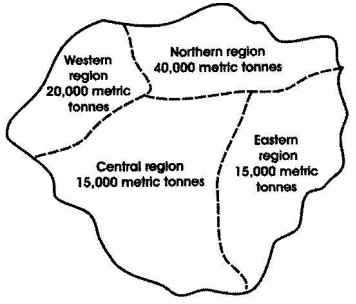
Draw the bar graph to represent the consumption of fertilizer by the four regions of Chero.
b) Calculate the total volume of fertilizers used in Chero as shown on the map.
c) Which two regions used the least amount of fertilizer in Chero? - a) Name the three (3) types of rainfall.
b) With the aid of a diagram, describe how any one type of rainfall is formed. - a) Mention four types of agricultural practices in Ghana.
b) Give two advantages and two disadvantages each of any two of the types of agricultural practices mentioned in (a) above. - Explain the importance of a named festival of one tribe in Ghana.
- a) What are the four major problems related to cattle rearing in Africa?
b) Suggest solutions to any two of these problems. - a) State five aims of the Organization of African Unity (O.A.U).
b) Mention five achievements of the Organization of African Unity (O.A.U).
Worked solutions to the theory questions are free in the app.
 All answers free on Google Play