 BECE Past Questions
BECE 2023 Pre-Technical Skills Past Questions and Answers
30 objective questions and 4 theory questions from the 2023 BECE Pre-Technical Skills paper. Answers and worked solutions for questions 1 to 10 are below; the rest are free in the app.
Practise this paper free, online or offline


On an iPhone? Download on the App Store
On Android? Get it on Google Play
Paper 1: Objectives
-
In design analysis, the use of the artefact is considered under
- A. cost
- B. ergonomics
- C. function
- D. safety
Answer: C -
One method of carrying out investigation when designing an artefact is
- A. library research
- B. developing ideas
- C. possible solutions
- D. workshop operation
Answer: A -
Straight distances are measured with a
- A. pair of compasses
- B. pair of dividers
- C. protractor
- D. rule
Answer: D -
The process of writing information on a working drawing is known as
- A. drawing
- B. lettering
- C. projections
- D. sketches
Answer: B -
Which of the following wires melts when there is excessive current?
- A. Earth wire
- B. Fuse wire
- C. Live wire
- D. Neutral wire
Answer: B -
In isometric drawing, the inclined lines are drawn to the horizontal at
- A. 15°
- B. 30°
- C. 45°
- D. 60°
Answer: B -
The first sign of spoilage on cooked rice is
- A. moulding and unpleasant smell
- B. sliminess and watery nature
- C. sign of maggots and colour change
- D. change in texture and bubbles on the surface
Answer: B -
A common chemical used for preserving fish in Ghana is
- A. saltpetre
- B. sodium glutamate
- C. salt
- D. vinegar
Answer: C -
Ama made ten table runners at a total cost of GH₵ 150.00 and sold one table runner for GH₵ 25.00. What is the total profit?
- A. GH₵ 350.00
- B. GH₵ 250.00
- C. GH₵ 200.00
- D. GH₵ 100.00
Answer: D -
A suitable fruit for making marmalade is
- A. pineapple
- B. orange
- C. pawpaw
- D. guava
Answer: B
Answers and solutions for questions 11 to 30 are free in the BECE Past Questions app, with timed practice and offline study.
-
Upper case letters are also known as
- A. small letters
- B. baseline letters
- C. capital letters
- D. line letters
-
A preliminary design is done to
- A. increase production
- B. produce ideas
- C. improve creativity
- D. guide production
-
Shading with lines is known as
- A. cross hatching
- B. hatching
- C. tonal value
- D. stippling
-
Which type of lettering is usually used for emphasis?
- A. Freestyle
- B. Italics
- C. Gothic
- D. Roman
-
When a hue is mixed with black, it becomes
- A. tinted
- B. neutral
- C. shaded
- D. complementary
-
Electrical current is carried by
- A. battery
- B. bulb
- C. fuse
- D. wires
-
The arrangement of blocks to avoid vertical continuous joint is termed
- A. batching
- B. bonding
- C. racking
- D. toothing
-
Which of the following lines is used for dimensioning?
- A.

- B.

- C.

- D.

- A.
-
PVA is a type of
- A. abrasive
- B. adhesive
- C. aggregate
- D. finish
-
When a file is clogged with iron filings, the fault is referred to as
- A. blocking
- B. chipping
- C. loading
- D. pinning
-
The bolster is used in conjunction with the club hammer to cut
- A. bricks
- B. metal
- C. plastics
- D. timber
-
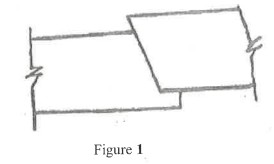
The joint shown in Figure 1 is a- A. butt joint
- B. grooved-lap joint
- C. grooved joint
- D. lap joint
-
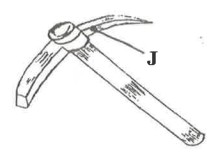
The figure shown is a- A. brick hammer
- B. mallet
- C. mattock
- D. pick axe
-
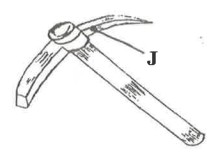
The part labelled J is made of- A. aluminium
- B. medium carbon steel
- C. odum
- D. polyvinyl chloride
-
Which of the following timbers is used for making formwork?
- A. Mahogany
- B. Odum
- C. Sapele
- D. Wawa
-
The right angled corner of a wall is checked with a
- A. builder's square
- B. gauge rod
- C. straight edge
- D. tee square
-
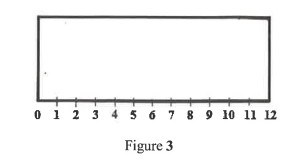
The developed surface is a- A. cone
- B. cylinder
- C. square prism
- D. triangular prism
-
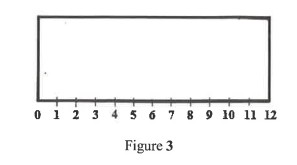
A product that can be made from the developed surface is- A. chalk box
- B. funnel
- C. match box
- D. milk tin
-
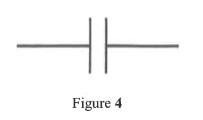
The electrical symbol shown in Figure 4 is a- A. battery
- B. capacitor
- C. cell
- D. resistor
-
Which of the following factors will make a household furniture weak?
- A. Broken tongue at joint
- B. Firm riveted joint
- C. Glued butt joint
- D. Sufficient glue at the joint
Paper 2: Theory
- a) The head of a school is organizing a graduation party for the J.H.S graduates. State two factors that would determine the type of meal service.
b) i) State two symptoms of scurvy.
ii) State two characteristics of a seam.
c) i) List two methods of drawing objects in pictorial view.
ii) State two analysis questions based on ergonomics.
iii) State one instrument used for drawing circles.
d) i) Define packaging.
ii) State three benefits of packaging.
iii) List two important information on a good package. - a) i) Make a freehand pictorial sketch of a brick.
ii) Show the standard dimension of the brick on the sketch in (a)(i).
b) List three materials suitable for making rivets.
c) Copy and complete the table below:
TYPE OF TIMBER ONE PROPERTY ONE USE
(i) Wawa
(ii) Odum
(iii) Mahogany
d)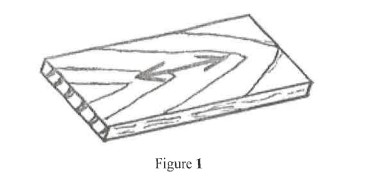
Figure 1 shows the sketch of a planed timber board to be smoothened and polished. Use it to answer questions (d)(i) and (d)(ii):
i) Name the suitable abrasive material to be used to smoothen the timber surface.
ii) State one purpose of polishing the smoothened surface of the timber. - a) i) Make a freehand pictorial sketch of a rip saw and label any two parts on the sketch.
ii) State one use of the rip saw.
b) Copy and complete the table below:
OPERATION TWO TOOLS REQUIRED FOR EACH OPERATION
(i) Cutting tenon joint (i) (ii)
(ii) Soldering sheet metals (i) (ii)
c)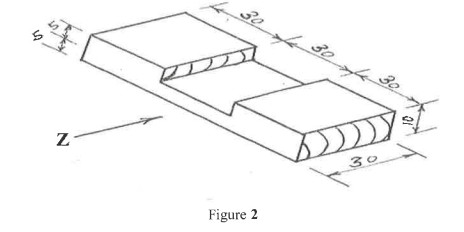
Figure 2 shows a sketch of a wooden block. Draw to full size:
i) The front view in the direction of arrow Z.
ii) The plan. - a) i) Make a freehand pictorial sketch of a steel rule.
ii) State one use of the steel rule.
iii) State two methods of maintaining the steel rule.
b) State one use of each of the following tools:
i) G-clamp;
ii) Soldering iron;
iii) Mould box.
c)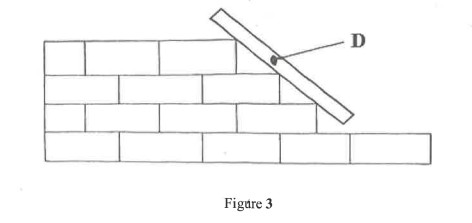
Figure 3 shows the front elevation of a wall.
i) State the number of courses of the wall.
ii) Name the future continuation method shown on the wall.
iii) Identify the tool labelled D on the sketch.
Worked solutions to the theory questions are free in the app.
More BECE Pre-Technical Skills papers
All 8 Pre-Technical Skills papers
 All answers free on Google Play