 BECE Past Questions
BECE 1993 Integrated Science Past Questions and Answers
40 objective questions and 4 theory questions from the 1993 BECE Integrated Science paper. Answers and worked solutions for questions 1 to 10 are below; the rest are free in the app.
Practise this paper free, online or offline


On an iPhone? Download on the App Store
On Android? Get it on Google Play
Paper 1: Objectives
-
The three states of matter are
- A. Water, liquid and gas
- B. Earth, liquid and gas
- C. Solid, liquid and air
- D. Gas, earth and water
- E. Gas, liquid and solid
Answer: E -
Soil erosion ....
- A. washes away the water content of soil
- B. enables crops to grow better
- C. washes away the top soil
- D. leaves the soil free of pests
- E. increases the fertility of soils
Answer: C -
What is the average body temperature of a healthy person?
- A. 25°C
- B. 36°C
- C. 37°C
- D. 38°C
- E. 39°C
Answer: C -
Steel is an alloy of
- A. Iron and Carbon
- B. Zinc and Copper
- C. Tin and Copper
- D. Iron and Zinc
- E. Carbon and Zinc
Answer: A -
Leguminous crops such as beans may often be cultivated to
- A. Add humus to the soil
- B. Add nitrogen to the soil
- C. Add protein to the soil
- D. Make the soil loamy
- E. Increase the calcium content of the soil
Answer: B -
Which of the following is an excretory organ?
- A. Anus
- B. Eye
- C. Heart
- D. Skin
- E. Pancreas
Answer: D -
Which of the following is the function of the hair in the nose? It
- A. keeps the nose warm
- B. makes breathing easier
- C. keeps the nose moist
- D. prevents carbon dioxide from entering the body
- E. filters dust from the air breathed in
Answer: E -
Which of the following is equal to one metre?
- A. 1 cm
- B. 10 cm
- C. 100 cm
- D. 500 cm
- E. 1000 cm
Answer: C -
Which of the following statements about feeding relationships is not true?
- A. Energy is transferred from one organism to another
- B. A green plant is the basis of any food chain
- C. Bacteria feed on dead organisms for energy
- D. A carnivore feeds on green plants for energy
- E. Omnivores feed on both plants and animals
Answer: D -
In a simple machine, the force that is applied to enable work to be done is known as
- A. Lever
- B. Load
- C. Pivot
- D. Effort
- E. Hinge
Answer: D
Answers and solutions for questions 11 to 40 are free in the BECE Past Questions app, with timed practice and offline study.
-
Which of the following changes does not occur in a girl at the age of puberty?
- A. The breasts develop
- B. The hips widen
- C. Menstruation
- D. The teeth becomes whiter
- E. Hair grows in the pubic area
-
The fixed point of a lever at which turning takes place is the
- A. pivot
- B. effort
- C. load
- D. handle
- E. machine
-
Which of the following mixtures can be separated by filtration?
- A. Salt in water
- B. Sugar in water
- C. Sand in water
- D. Oil in water
- E. Omo in water
-
The skin is made up of
- A. One layer
- B. Two layers
- C. Three layers
- D. Four layers
- E. Six layers
-
The force which acts between planets and keeps them in their orbits is called
- A. electrical force
- B. magnetic force
- C. gravitational force
- D. frictional force
- E. elastic force
-
Which of the following types of soil allows the fastest rate of drainage?
- A. Clayey soil
- B. Loamy soil
- C. Black soil
- D. Sandy soil
- E. Humus
-
Which of the following is the percentage composition of oxygen in the air?
- A. 0.03
- B. 1
- C. 21
- D. 78
- E. 98
-
Disposal of sewage into a river which supplies water for domestic use may lead to an outbreak of
- A. malaria
- B. cholera
- C. guinea worm
- D. river blindness
- E. tuberculosis
-
The process by which a naphthalene ball (camphor) placed in a box gets smaller in size is termed
- A. Melting
- B. Diffusion
- C. Evaporation
- D. Sublimation
- E. Condensation
-
Which of the following food substances is not oxidized during respiration?
- A. Fatty acids
- B. Amino acids
- C. Glucose
- D. Cellulose
- E. Vitamins
-
Kerosene and petrol are obtained from crude oil by
- A. distillation
- B. condensation
- C. filtration
- D. evaporation
- E. decantation
-
Which of the following encourages the spread of venereal diseases?
- A. Poor family planning
- B. Drug Abuse
- C. Mental ill health
- D. Parental wealth
- E. Indiscriminate sexual intercourse
-
A torch light bulb lights up when connected to a dry cell. What type of energy is obtained from the cell?
- A. Chemical energy
- B. Light energy
- C. Potential energy
- D. Electrical energy
- E. Heat energy
-
Which of the following is not a soil nutrient?
- A. Hydrogen
- B. Nitrogen
- C. Potassium
- D. Calcium
- E. Phosphorus
-
Which of the following organisms causes bilharziasis?
- A. Tapeworm
- B. Blood fluke
- C. Blood worm
- D. Round worm
- E. Liver fluke
-
A piece of stone sinks in water because
- A. its density is the same as that of water
- B. it is able to displace its own weight of water
- C. its density is less than that of water
- D. its density is greater than that of water
- E. the water contains air which allows the stone to sink
-
Which of the following is characteristic of reflex action?
- A. It happens slowly
- B. It happens consciously
- C. It takes a long path
- D. It involves thinking
- E. It is automatic
-
All the following are sense organs except the
- A. eye
- B. brain
- C. ear
- D. skin
- E. tongue
-
A mixture of raw starch and water is best separated by
- A. boiling
- B. distillation
- C. decantation
- D. winnowing
- E. crystallization
-
Which of the following is a horizontal underground stem?
- A. Cocoyam
- B. Onion
- C. Carrot
- D. Yam
- E. Ginger
-
Which of the following is a physical change?
- A. Heating of sugar
- B. Heating of sulphur and iron filing
- C. Boiling of water
- D. Burning of magnesium ribbon
- E. Heating of potassium chlorate
-
In an experiment in which a variegated leaf is used, which of the following is proved to be necessary for photosynthesis?
- A. Carbon dioxide
- B. Light
- C. Chlorophyll
- D. Water
- E. Oxygen
-
Friction is defined as a force which
- A. accompanies motion
- B. acts against motion
- C. causes motion
- D. makes motion easy
- E. is created by motion
-
Which of the following is not a function of the lens in the human eye? It
- A. allows light rays to pass through it
- B. refracts the light rays passing through it
- C. helps to focus the image onto the retina
- D. becomes thinner when focusing a distant object
- E. reflects part of the light rays falling on it
-
Which of the following practices in a community will increase its environmental pollution?
- A. Building of schools with workshops
- B. Planting of trees on large areas of land
- C. Depositing of household rubbish near a source of drinking water
- D. Removal of sand and refuse from choked gutters
- E. Building of an efficient underground sewage system
-
Smoke is an example of a mixture of
- A. Gases
- B. Liquids in gases
- C. Solids in liquids
- D. Solids in gases
- E. Solids in solids
-
Which of the following is the best method of preventing skin disease?
- A. The use of perfume on the skin
- B. The use of bleaching cream on the skin
- C. Avoiding contact with diseased person
- D. Keeping the skin clean by washing it regularly
- E. Changing of clothes regularly
-
Which of the following has a different physical state from the others under ordinary conditions?
- A. Zinc
- B. Lead
- C. Iron
- D. Mercury
- E. Aluminium
-
Heat from the sun reaches the earth by
- A. Conduction
- B. Convection
- C. Radiation
- D. Reflection
- E. Refraction
-
During an eclipse of the moon, the
- A. Sun and the moon are on one side of the earth
- B. Earth and the sun are on one side of the moon
- C. Sun comes between earth and moon in a straight line
- D. Earth comes between sun and moon in a straight line
- E. Moon comes between sun and earth in a straight line
Paper 2: Theory
- (a) Define the following terms and give one example of each:
(i) Element
(ii) Mixture
(iii) Compound
(b) Explain the following terms:
(i) Work
(ii) Energy
(c) State the units in which each of the following are measured:
(i) Power
(ii) Energy
(iii) Electric current
(iv) Temperature
(d) A body of mass 100 kg is placed at a point 2 m above the ground. What is the potential energy of the body with reference to the ground? [Take g = 10 ms-2]
(e) State three characteristics of each of the following:
(i) An insect pollinated flower
(ii) A wind pollinated flower - (a) (i) Explain the term balanced diet.
(ii) Name any two classes of food which should be present in a balanced diet.
(iii) Give one function of each class of food named in (a) (ii) above.
(b) An object is placed in front of a pinhole camera as shown in the diagram below. Draw in your answer book a ray diagram (not to scale) to show how the image is formed on the screen of the camera.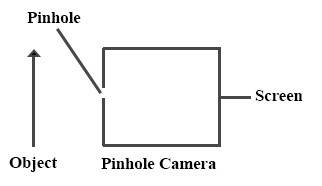
(c) State the two laws of reflection of light.
(d) (i) Describe how ions are formed from atoms.
(ii) State two differences between a proton and an electron. - (a) (i) Explain the term electromagnetism.
(ii) Given a nail, insulated wire, key (or switch) and a battery, show by means of a circuit diagram how the nail can be magnetized.
(b) List three symptoms of malaria.
(c) State three ways of keeping the environment clean.
(d) Write down the names of the new substances formed when the following compounds react:
(i) Ammonia and dilute hydrochloric acid
(ii) Sodium hydroxide and dilute hydrochloric acid
(iii) Calcium carbonate and dilute hydrochloric acid. - (a) (i) What is meant by a satellite?
(ii) State one difference between a natural and an artificial satellite.
(iii) State two uses of artificial satellites.
(b) Give two differences between the mass and weight of a body.
(c) Write the chemical formulae for the following substances:
(i) Calcium oxide
(ii) Water
(iii) Copper sulphate.
(d) What will be the effect on the colour of blue litmus paper when it is dropped in each of the following solutions?
(i) Sodium hydroxide solution
(ii) Dilute hydrochloric acid
(iii) Lime juice
(iv) Water
(e) (i) Define breathing
(ii) Arrange the following parts of the human being respiratory system in order in which air from the atmosphere passes through them during breathing:
Trachea, nostrils, lungs and bronchus.
(iii) Describe briefly what happens to a piece of bread when it reaches the duodenum of a human being.
Worked solutions to the theory questions are free in the app.
More BECE Integrated Science papers
All 38 Integrated Science papers
 All answers free on Google Play