 BECE Past Questions
BECE 2000 Social Studies Past Questions and Answers
40 objective questions and 6 theory questions from the 2000 BECE Social Studies paper. Answers and worked solutions for questions 1 to 10 are below; the rest are free in the app.
Practise this paper free, online or offline


On an iPhone? Download on the App Store
On Android? Get it on Google Play
Paper 1: Objectives
-
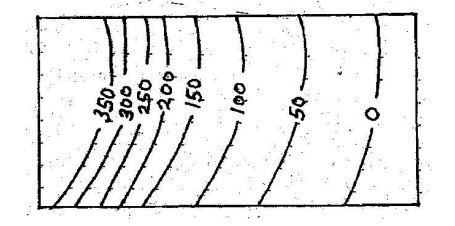
The vertical interval of the contour lines on the diagram is- A. 0 metres
- B. 50 metres
- C. 100 metres
- D. 300 metres
- E. 350 metres
Answer: B -
What type of slope does the diagram show?- A. Uniform
- B. Convex
- C. Gentle
- D. Concave
- E. Steep
Answer: D -
The conventional sign
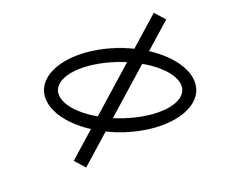 on a topographical map represents a
- A. farm
- B. church
- C. market
- D. castle
- E. mosque
Answer: D -
Cairo in Egypt is on longitude 30°E and Tema in Ghana is on Longitude 0°. What is the time difference between Cairo and Tema?
- A. 2 hours
- B. 3 hours
- C. 15 hours
- D. 30 hours
- E. 45 hours
Answer: A -
Latitude 66 1/2° North refers to the
- A. Antarctic Circle
- B. Tropic of Cancer
- C. Tropic of Capricorn
- D. Arctic Circle
- E. Equator
Answer: D -
The revolution of the earth round the sun causes
- A. day and night
- B. high tides
- C. four seasons
- D. earthquakes
- E. line squalls
Answer: C -
The North Pole receives 24 hours of sunlight when the sun is overhead on the
- A. Equator
- B. Tropic of Cancer
- C. Tropic of Capricorn
- D. Arctic Circle
- E. Antarctic Circle
Answer: B -
Which of the following towns enjoys a cool climate throughout the year?
- A. Accra
- B. Aburi
- C. Nkawkaw
- D. Tema
- E. Koforidua
Answer: B -
Thick dark clouds, thunder, and lightning are associated with
- A. convectional rainfall
- B. relief rainfall
- C. evaporation
- D. transpiration
- E. condensation
Answer: A -
What name is given to the point where a tributary joins the main river?
- A. Source
- B. Mouth
- C. Confluence
- D. Delta
- E. Estuary
Answer: C
Answers and solutions for questions 11 to 40 are free in the BECE Past Questions app, with timed practice and offline study.
-
Which of the following is not a coastal landform?
- A. Stack
- B. Sand bar
- C. Spit
- D. Levee
- E. Lagoon
-
The main type of vegetation found in the south-western part of Ghana is the
- A. Coastal scrub and grassland
- B. Mangrove forest
- C. Guinea savana
- D. Sudan savana
- E. Rain forest
-
Which of the following is not a sedimentary rock?
- A. Granite
- B. Clay
- C. Sandstone
- D. Shale
- E. Coal
-
The prevailing winds that blow over most parts of northern Ghana between November and February are the
- A. South-West monsoon winds
- B. North-East monsoon winds
- C. North-East Trade winds
- D. Westerly winds
- E. Easterly winds
-
The railway line from Dunkwa to Awaso was built by the British mainly to transport
- A. timber
- B. bauxite
- C. manganese
- D. cocoa
- E. foodstuffs
-
Which one of the following towns is noted for textile manufacturing?
- A. Mampong
- B. Nkawkaw
- C. Oda
- D. Wa
- E. Juapong
-
The people of Ada celebrate the
- A. Akwambo festival
- B. Odwira festival
- C. Lukusi festival
- D. Asafotu-fiam festival
- E. Danyiba Kaka festival
-
Which of the following ethnic groups is found between the Pra and the Densu rivers?
- A. The Fante
- B. The Ga
- C. The Akwamu
- D. The Adangme
- E. The Sefwi
-
The capital built by Osei Tutu I for the Ashanti kingdom was
- A. Kumawu
- B. Ejisu
- C. Kumasi
- D. Mampong
- E. Bekwai
-
The Sagbadre war was fought between the Anlo and the
- A. Dutch
- B. British
- C. Germans
- D. Portuguese
- E. Danes
-
The British used the indirect rule system to govern the people of the Gold Coast through the
- A. police
- B. army
- C. registrars
- D. chiefs
- E. judiciary
-
Sir Gordon Guggisberg was the Governor of the Gold Coast from
- A. 1830 to 1845
- B. 1846 to 1860
- C. 1901 to 1919
- D. 1909 to 1926
- E. 1919 to 1927
-
Which of the following was not a member of the Fante confederation
- A. The Denkyira
- B. The Brong
- C. The Assin
- D. Twifu
- E. The Wassa
-
The Aborigines Rights Protection Society was formed in 1897 to
- A. protect the property of the local people
- B. educate the people on how to vote
- C. protect the people from invasion
- D. give the people the license to trade
- E. register the people for the purpose of taxation
-
One of the founding member of the United Gold Coast Convention (UGCC) was
- A. Dr Kwame Nkrumah
- B. Dr J.B. Danquah
- C. Mr Kojo Botsio
- D. Mr K.A. Gbedemah
- E. Mr Krobo Edusei
-
The Watson Commission was set up in
- A. 1919
- B. 1925
- C. 1930
- D. 1948
- E. 1951
-
The first Governor-General of independent Ghana was
- A. Commander Hill
- B. Sir Gordon Guggisberg
- C. Sir Charles Arden-Clarke
- D. Lord Listowell
- E. George Maclean
-
The soldiers who returned to the Gold Coast after the Second World War faced all the following problems except
- A. non-payment of pension benefits
- B. unavailability of houses
- C. absence of jobs
- D. high prices of goods
- E. being denied the right to vote
-
The Drakensberg mountains are found in
- A. South Africa
- B. West Africa
- C. East Africa
- D. Central Africa
- E. North Africa
-
Tin is mined in Nigeria at
- A. Enugu
- B. Kaduna
- C. Jos
- D. Kano
- E. Port Harcourt
-
Which of the following methods is used in mining crude oil?
- A. Open cast
- B. Deep shaft
- C. Drilling
- D. Dredging
- E. Panning
-
The leading producer of coffee in West Africa
- A. Ghana
- B. La Cote d'Ivoire
- C. Liberia
- D. Nigeria
- E. Sierra Leone
-
Which of the following people are livestock rearers in East Africa?
- A. Hausa
- B. Tuareg
- C. Fulani
- D. Masai
- E. Mossi
-
All the following were important centres of the Trans-Saharan trade except
- A. Timbuktu
- B. Kumbi-Saleh
- C. Audaghost
- D. Gao
- E. Taghaza
-
The king who expanded the Mali Kingdom into an empire was
- A. Mansa Musa
- B. Sakora
- C. Sundiata
- D. Sumanguru
- E. Mansa Ule
-
One of the reasons for the partition of West Africa by the Europeans was to
- A. spread the gospel
- B. stop the slave trade
- C. protect the indigenous people
- D. protect their places of trade
- E. set up industries
-
Which of the following countries ruled Togo before the First World War?
- A. Portugal
- B. Germany
- C. Britain
- D. France
- E. Spain
-
The treaty for the formation of the Economic Community of West African States (ECOWAS) was signed in
- A. Accra
- B. Abidjan
- C. Lagos
- D. Niamey
- E. Lome
-
The Casablanca Group that helped with the formation of the Organization of African Unity (OAU) was made up of Morocco, Guinea, Egypt, Libya, Mali and
- A. Ghana
- B. Congo
- C. Nigeria
- D. Kenya
- E. Zambia
-
The administrative body of the United Nations Organization (UNO) is the
- A. Security Council
- B. International Court of Justice
- C. General Assembly
- D. Economic and Social Council
- E. Secretariat
Paper 2: Theory
Commodity Production in Tonnes Cocoa 90,000 Coffee 70,000 Maize 80,000 Sorghum 30,000 Rice 60,000
a) Draw a simple bar graph to represent the data using a scale of 1cm to 10,000 tonnes
b) Calculate the total volume of production in tonnes
c) Mention one other method that can be used to represent the data above- a) Draw and label the structure of the earth
b) Name the three types of rocks
c) State four importance of rocks - a) List four duties of the police in Ghana
b) Explain four responsibilities of the individual in Ghana - a) List four minerals mined in Ghana
b) Name one important town associated with each of the minerals listed in (a)
c) Explain any four benefits of mining to Ghana - a) Give four reasons for the rise of the old Mali Empire
b) Mention two factors that led to the fall of the old Mali Empire - a) Mention four causes of conflicts in the world
b) Explain any four effects of conflicts in the world
Worked solutions to the theory questions are free in the app.
 All answers free on Google Play